Category Archives: Uncategorized

When Does a Laboratory Need a LIMS? 7 Signs You’ve Outgrown Spreadsheets

when does a laboratory needs LIMS

When does a laboratory need a LIMS? It’s one of the most common questions laboratory managers ask as their operations grow. Spreadsheets are where everything begins. A few samples become a few hundred. A simple tracking sheet becomes several workbooks. Then more tabs are added, formulas become more complex, and suddenly the entire laboratory is relying on a system that was never designed to manage laboratory operations.

The spreadsheet that solved yesterday’s problem could be creating tomorrow’s bottleneck.

At first, spreadsheets feel flexible and familiar. But as workloads grow, compliance requirements increase, and teams expand, they can quietly become one of the biggest barriers to efficiency.

So how do you know when your laboratory has outgrown spreadsheets?

Here are seven common signs:

1. Your Team Is Spending More Time Managing Data Than Performing Science

Scientists, technicians, and quality teams should be focused on testing, analysis, and decision-making.

Instead, many laboratories find themselves manually entering results, updating multiple files, copying data between systems, and checking formulas.

The result? Valuable time is spent maintaining records rather than generating insights.

For example, entering 100 sample results may only take a few minutes. But repeat that process multiple times per day, across multiple analysts, and those minutes quickly become hours every week.

A LIMS automates much of this administration, allowing teams to focus on higher-value work.

2. Sample Tracking Is Becoming Difficult

One of the earliest warning signs is losing visibility of sample status.

Questions such as:

  • Has this sample been tested?
  • Who approved the result?
  • Which version of the report is correct?
  • Where is the sample now?

often become more frequent as volumes increase.

A laboratory processing 20 samples per day may manage comfortably using spreadsheets. A laboratory processing 200 samples per day often struggles to maintain visibility without a centralised system.

A LIMS provides real-time tracking from sample receipt through to reporting.

3. Audit Preparation Feels Stressful

Audits should not require days of searching through folders, emails, and spreadsheets. If your team spends significant time gathering evidence, proving traceability, or reconstructing records, your current process may be creating unnecessary risk.

Modern laboratories increasingly need:

  • Complete audit trails
  • User accountability
  • Electronic approvals
  • Controlled data access

These requirements are difficult to manage consistently using spreadsheets alone.

4. Errors Are Becoming More Common

Spreadsheets are powerful tools, but they are also highly dependent on human input.

A single accidental formula change, duplicate entry, or copy-paste mistake can impact reporting, investigations, and compliance.

As laboratory complexity grows, the likelihood and cost of these errors grows with it.

Consider a laboratory generating hundreds of reports per month. Even a small error rate can lead to significant rework, delayed reporting, or customer dissatisfaction.

As laboratories grow, reducing human error becomes increasingly important.

5. Different Teams Are Working in Different Systems

Many laboratories find themselves storing information in several locations:

  • Sample tracking in spreadsheets
  • Results in shared folders
  • Quality records in separate systems
  • Instrument data stored independently

For example, generating a single client report may require information from three or four different sources. This creates data silos.The more disconnected the data, the harder it becomes to maintain efficiency and confidence in decision-making.

A LIMS creates a single source of truth, bringing data, workflows, and reporting together in one platform.

6. Growth Is Creating Operational Pressure

Growth is often the point where spreadsheets begin to struggle.

Perhaps your laboratory has:

  • Added new testing methods
  • Expanded into multiple locations
  • Increased sample volumes
  • Hired additional analysts
  • Won larger customer contracts

What worked for a small laboratory rarely scales efficiently.

If every increase in workload requires additional manual administration, your systems may be limiting future growth.

A modern LIMS helps laboratories scale without increasing complexity at the same rate. Scalable laboratories need scalable systems.

7. Reporting Takes Longer Than It Should

Laboratory data is valuable only when it can be accessed, reviewed, and shared efficiently.

If teams are spending hours compiling reports, validating data, and manually creating customer deliverables, reporting may have become a bottleneck.

A modern laboratory informatics platform can help streamline reporting by keeping data connected from sample receipt through to final approval. You can simply click on the “Generate a CoA” in a modern LIMS and automate your report process. 

A Simple Rule of Thumb 

There is no perfect time to implement a LIMS. However, laboratories should begin evaluating their options if they:

  • Conduct more than 500 tests per month
  • Have multiple staff entering or reviewing results
  • Need stronger compliance and traceability
  • Struggle to track samples efficiently
  • Spend significant time preparing reports or audits
  • Plan to grow over the next few years

The best time to implement a LIMS is often before operational challenges become business problems.

Ready to See What a Modern Laboratory Platform Looks Like?

QLIMS helps laboratories centralise sample management, automate workflows, strengthen compliance, and reduce manual administration within a configurable cloud-based platform.

Whether you’re managing hundreds of samples or hundreds of thousands, QLIMS is designed to grow with your laboratory.

Book a personalised QLIMS demonstration and discover how modern laboratories are replacing spreadsheets with connected, scalable laboratory informatics.

Welcome to our New Website!

OnQ Software are pleased to announce the launch of our brand new website! 

We have designed the website in a manner that makes navigating through the suite of software and services we offer much easier and is compatible with modern tablets and smartphones, to allow you to keep in touch with us while on the move.

Additionally, we have launched a whole new set of editions of our QLIMS Cloud-Hosted SaaS system, with a section devoted to its inclusions and pricing, giving you a better idea of not only what we can offer but how it can be applicable to your lab and budget. 

We will be updating our Blog regularly to keep you up to date with our company and software and all the new happenings in the LIMS industry.

We are here to provide you with an information management system that is truly Lab grown. So take the time to explore our new site, perhaps bookmark us and be sure to check back regularly for more information about our services or feel free to contact us via phone, email or social media. 

Thank You!

PathXL Granted Patent for Automated Tumor Analysis on H&E Digital Slides

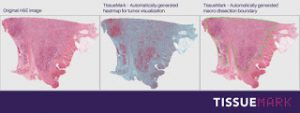
UK Patent 2513916 was today granted to PathXL.  The patent is one of several patents filed that underpin PathXL’s ground-breaking TissueMark™technology; powerful methods for the automated annotation of tumor boundaries in digital H&E tissue samples.

OnQ Software -

PathXL is a global pioneer in the use of web-based solutions for digital pathology, and provides innovative software for use in drug discovery research, biomarker analysis and education. Their product for the automated identification and annotation of tumor tissue, TissueMark, was awarded the Frost and Sullivan 2014 European New Product Innovation Award for Automated Image Analysis for Digital Pathology. PathXL has been named in the top 50 fastest growing companies in Ireland by Deloitte for the past 4 consecutive years.

This adds to the patent landscape within the digital pathology industry and PathXL’s growing patent portfolio.  This patent describes how complex pattern recognition can be used to define tumor boundaries for macrodissection and improve pre-analytical annotation for molecular diagnostics and next generation sequencing in solid cancers.  By recognising tumor patterns in stained tissue samples, heatmaps can be used to map the tissue and determine the most important regions for tumor cell enrichment. Using the heat-map, a tumor boundary is automatically generated which can be used as the guide for macrodissection and accurate tumor cell quantitation.  This methodology is highly important to molecular pathology laboratories in driving quality and consistency in solid tumor molecular testing and precision medicine.  This is vital in improving sample quality assessment prior to genomic profiling.  Recent reports of high failure rates in the Obama precision medicine initiative (http://www.statnews.com/2016/01/22/precision-medicine-cancer-biopsies/) and other trials highlight the need to improve tumor identification, annotation and analysis.  This patent and the TissueMark platform can provide those important level of objectivity, reproducibility and consistency necessary to deliver high quality solid tumor genomics and molecular diagnostics.

PathXL are currently the leading company focussing on H&E imaging to support tissue-based research and future diagnostic support in pathology.
Dr Peter Hamilton, VP for Research & Development at PathXL said “We are delighted to be granted this patent on an important area of innovation.  This is the first of a number of patents filed in the field of digital pathology and H&E analysis where PathXL are clearly leading the way.  Integrating these new methods with PathXL’s cool workflow software enables customers to effectively utilise powerful tissue recognition algorithms across an emerging range of important applications including improving the quality of molecular diagnostics and large scale genomics trials.
Des Speed, CEO added “PathXL exists to provide cutting-edge Digital Pathology software solutions that empower pathologists in cancer research.   The granting of this patent confirms the novel nature of this element in our “Tissue Recognition Engine” platform, and further reinforces the important outcomes from our strong focus on research and development in this distinctive area.”
About PathXL

PathXL is a global pioneer in the use of web-based solutions for digital pathology, and provides innovative software for use in drug discovery research, biomarker analysis and education. Their product for the automated identification and annotation of tumor tissue, TissueMark, was awarded the Frost and Sullivan 2014 European New Product Innovation Award for Automated Image Analysis for Digital Pathology. PathXL has been named in the top 50 fastest growing companies in Ireland by Deloitte for the past 4 consecutive years.


Source – http://www.pathxl.com/news/pathxl-granted-patent-for-automated-tumor-analysis-on-he-digital-slides

For sales enquiries in Asia Pacific Region please contact OnQ Software – sales@onqsoft.com.au